Write cases in markdown, pick a few into an explicit run, judge each one, and it seals into a report you can share. Local-first — your cases are plain files you own.
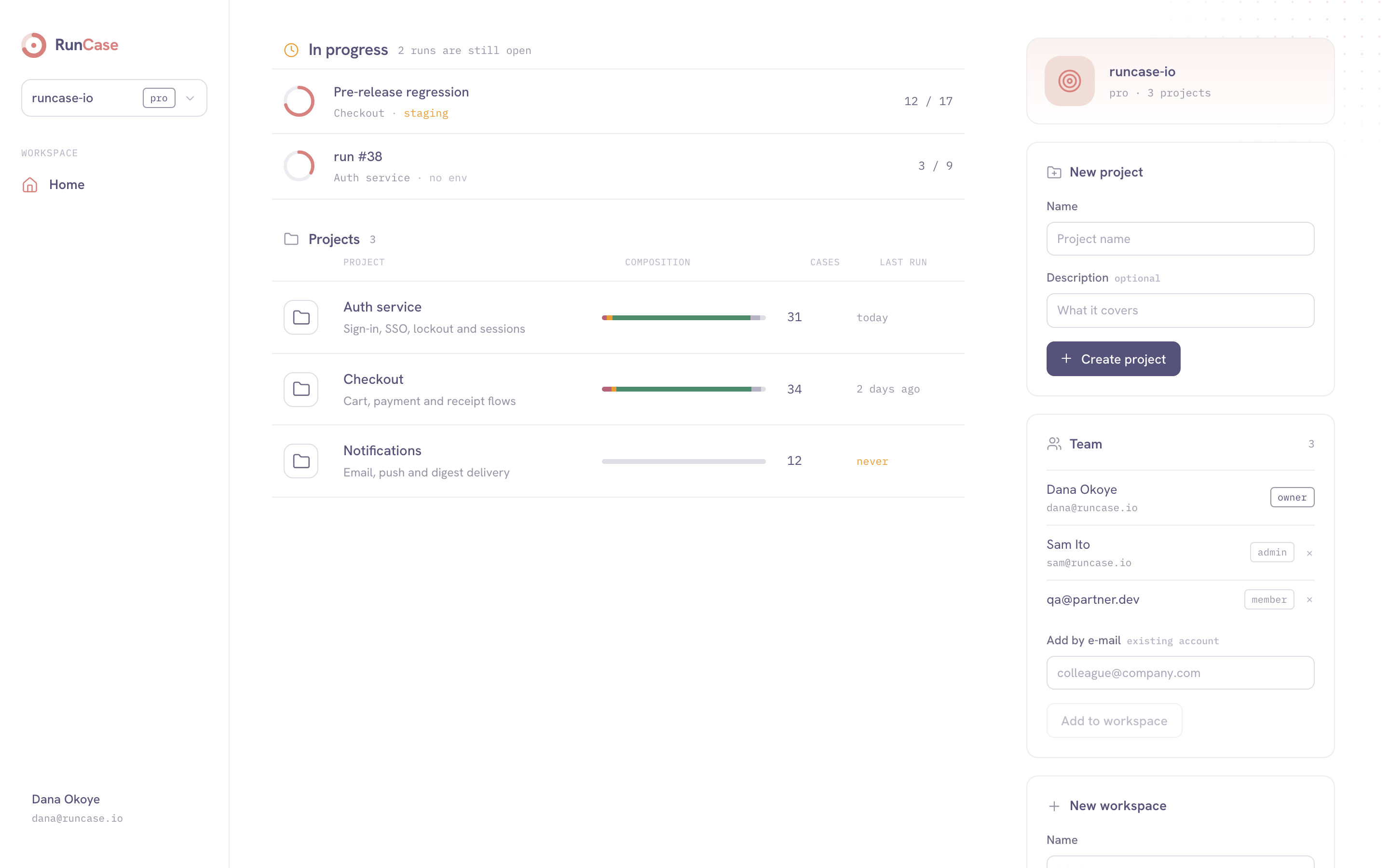
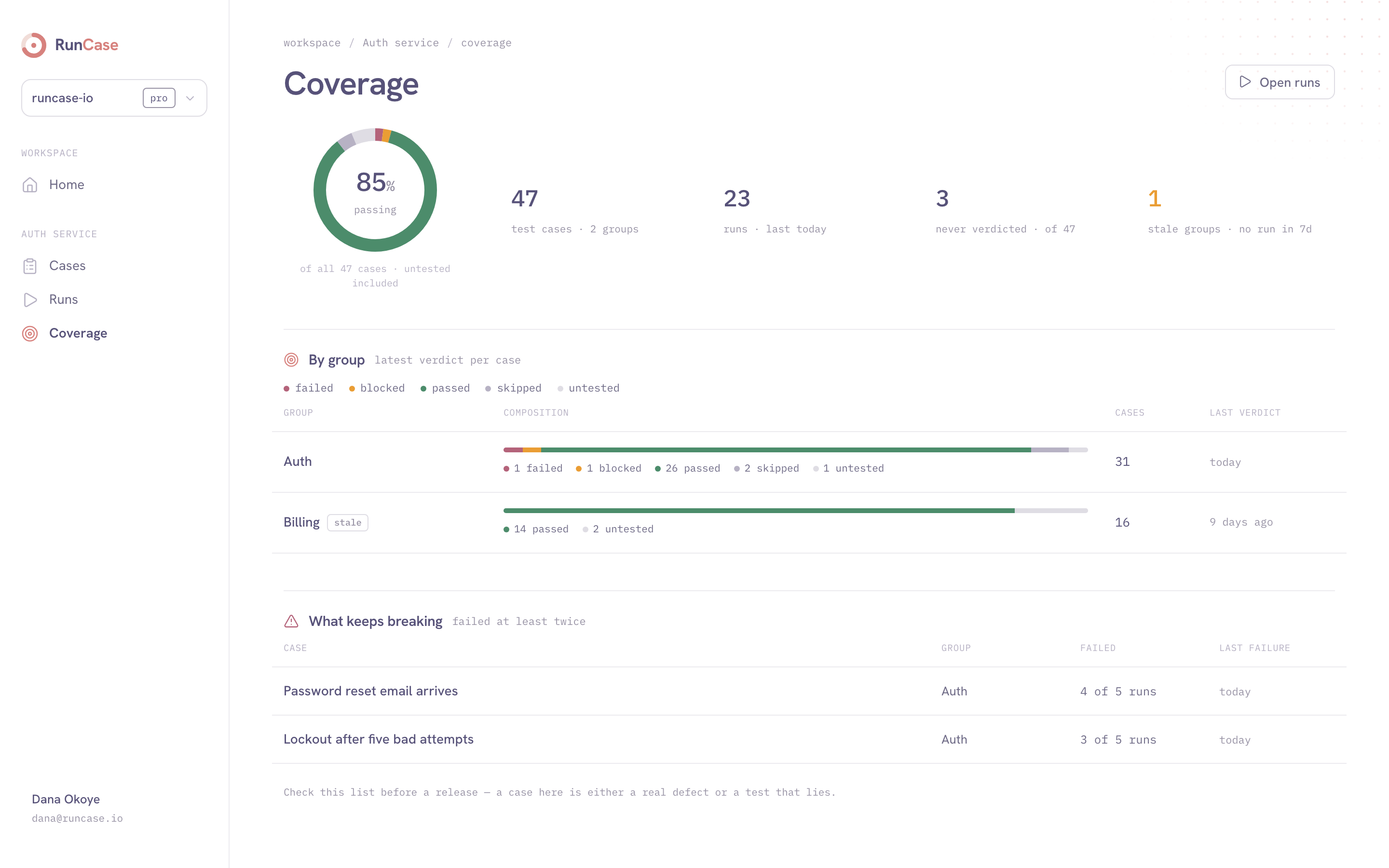
No dashboards to configure, no suites to maintain. This is the actual UI — projects, a live run, and the coverage it rolls up to.
Flat cases with an optional group and a distribution bar per project. Open runs sit at the top; everything else is one hairline away.
Not "the last run's outcome" — a case nobody ran shows as untested, never silently dropped. Stale groups get flagged, and "what keeps breaking" lists the tests that fail again and again.
Starting a run snapshots its cases. Edit them afterwards and the run doesn't change — it stays a record of what was true that afternoon.
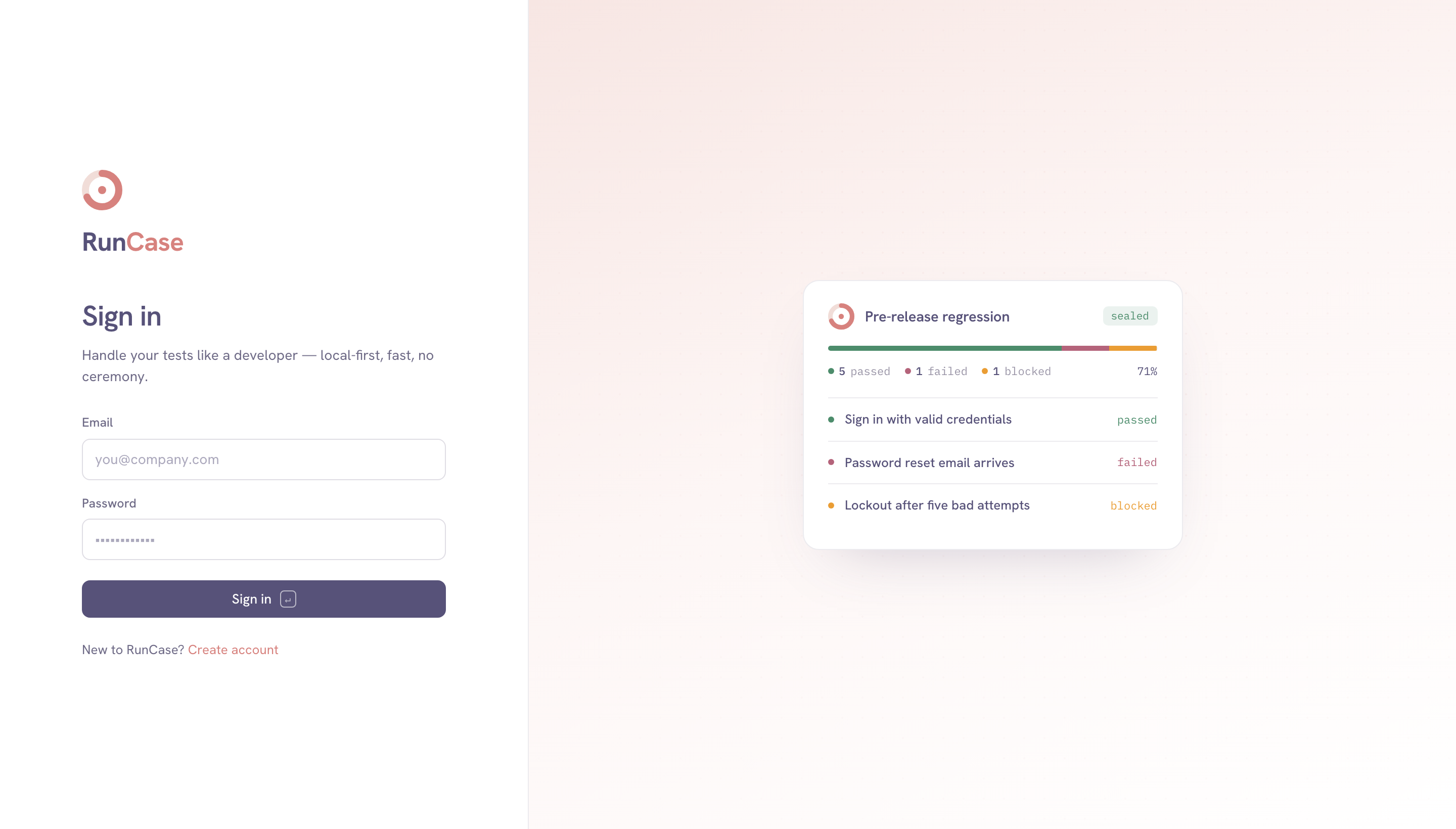
One motion, run right before a release. A batch of cases in, a decision out.
## Title, a Given/When/Then body, Key: value metadata. Paste a whole file and each heading becomes a case.p pass, f fail, s skip, b block. Fail and block require a note: what went wrong, where. That rule is enforced.p / f / s / b, j/k to move. The prior verdict shows next to each case — "failed 3 of 5 runs". Attach or paste a screenshot as evidence.The rules are short enough to hold in your head. ## Title starts a case,Key: value lines become metadata, and Given / When / Then are highlighted on render — never rewritten, never validated.
## Title → one case · Key: value → metadata, stripped from the body · only Priority is validated (a bad value warns, never blocks) · everything else stays plain text.The CLI keeps local files and the workspace in sync, and drafts cases from a diff against a model running on your machine — the code never leaves it. In private beta now.
The web app is live. These are next — the same data, judged wherever you already are.
A first-class terminal surface — sync your markdown, generate from a diff locally, and judge a run without leaving your shell.
pull / push keep files and workspace in stepThe same app, native and offline-first on your machine. Open a workspace, run a batch, and seal a report with no browser tab.
That's deliberate — you're never charged for testing more. The plan line is projects and team size, not how often you run.
RunCase isn't public yet. Leave an email and we'll send it when the first build is ready — no drip campaign.